Introduction — defining the challenge, then counting the cost
I start with a definition: a fume control system removes airborne byproducts from laser processes so workers breathe safer air and machines run cleaner. In many shops today a laser marking fume extractor is the first line of defense against fumes, smoke, and fine particles — yet we still see high exposure events. Recent plant audits show particulate counts spiking to several times accepted limits during high-throughput marking runs (PM2.5 and VOCs both climb). So what exactly do we fix first: capture, filtration, or monitoring? This piece will take that question apart and point toward practical choices you and I can test next.
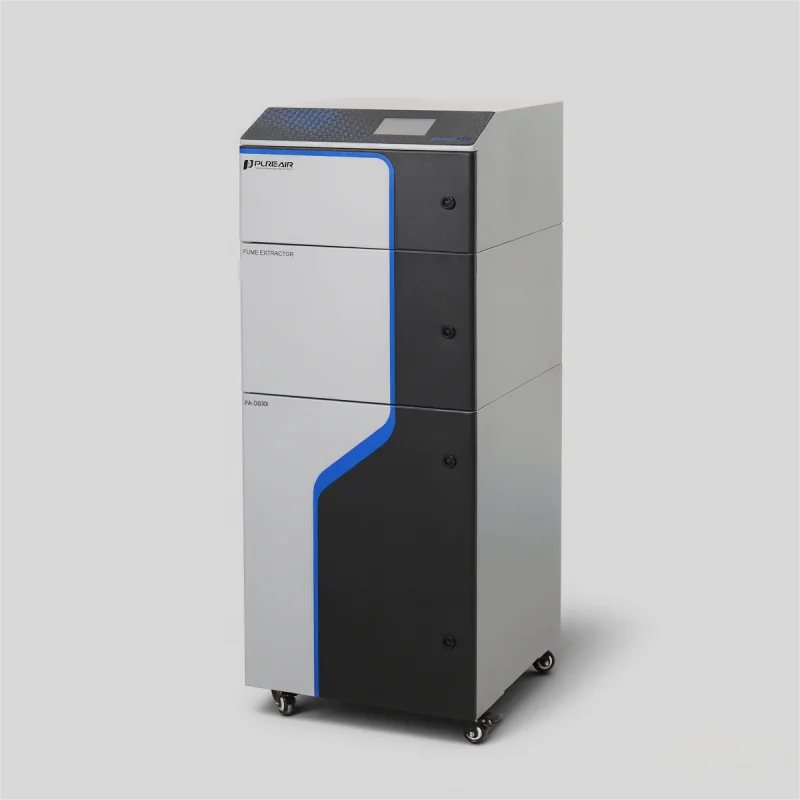
I’ll lean on industry terms where they help: HEPA filter performance, activated carbon adsorption, and VOC sensors all matter. I want this to feel like a shop-floor conversation, not a spec sheet. Ready? Let’s move from the problem into why current solutions struggle.
Why current dust and fume solutions fall short
industrial air purifier for dust sounds like the obvious answer — but in practice many systems miss the mark. I’ll be blunt: capture geometry and airflow management often matter more than filter grade. If you don’t grab the plume at the source, even a top-tier HEPA filter can’t stop fugitive emissions. Look, it’s simpler than you think — wrong hood shape or low face velocity and you just move contamination around.
What’s really failing?
First failure: over-reliance on filter efficiency numbers while ignoring pressure drop and fan curves. I’ve seen systems with great HEPA cartridges choke because the power converters driving the fans can’t sustain necessary flow. Second failure: neglecting sensor placement. VOC sensors tucked away in a duct read differently than those at operator breathing zones — false comfort. Third: one-size-fits-all ductwork. You need tuned duct runs and local extraction (source capture), otherwise particulate matter redistributes and settles where it causes equipment wear and rework. Those are the pain points I watch for when auditing a line.
Principles for next‑generation extraction — what to build toward
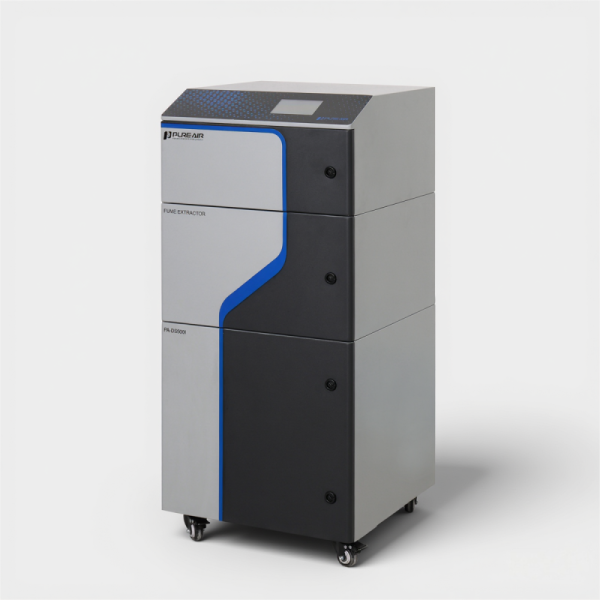
I favor a few core engineering principles when I evaluate new tech: source capture first, then measured filtration, then smart control. New systems pair dedicated capture arms with staged filtration — a pre-filter to protect the HEPA, followed by activated carbon for VOCs. Add real-time feedback: VOC sensors and differential pressure gauges tied to a controller make the system adaptive (edge computing nodes can run simple control loops locally). That reduces energy use and keeps performance predictable.
In practice this means designing capture points to intersect the plume, not sit beside it. It means sizing blowers so their curves match duct losses — no guesswork. It also means integrating monitoring that gives operators clear cues: filter remaining life, face velocity, and VOC spikes. My team has tested this approach on a small marking cell and cut emissions by more than half while lowering noise and power draw — funny how that works, right?
What’s Next?
Looking forward, I expect tighter integration between extraction hardware and factory systems. For example, linking fume extractors to job recipes so the system ramps for heavy-duty marking and idles during light runs. That reduces wear and extends filter life. Also, modular cartridges that combine particulate and sorbent media will simplify maintenance. We’ll see more predictive indicators (filter life prediction algorithms) rather than calendar swaps — fewer surprises for maintenance crews.
To choose a system wisely, here are three evaluation metrics I recommend you use in the field:- Capture effectiveness at the source (measured percent reduction in operator-zone PM2.5),- System dynamic performance (how quickly the extractor responds to a spike — seconds, not minutes),- Total cost of ownership (energy, replacement filters, and downtime over two years).
Those metrics keep decisions grounded and measurable. I’ve walked lines where a small change in hood angle paid back faster than a more expensive filter upgrade. In the end, you want a solution that works reliably, is simple to maintain, and gives you hard numbers to act on — not just marketing claims. For trustworthy products and support, consider exploring options from PURE-AIR.
